3500/05-01-01-00-00-01
3500/05-01-01-00-00-01
Monitor Module for Reciprocating Compressor Cylinder Dynamic Pressure ConfigurationBearing temperature and air valve temperature measuring points shall be configured with corresponding 3500/60,/61,/62 or/65 monitor modules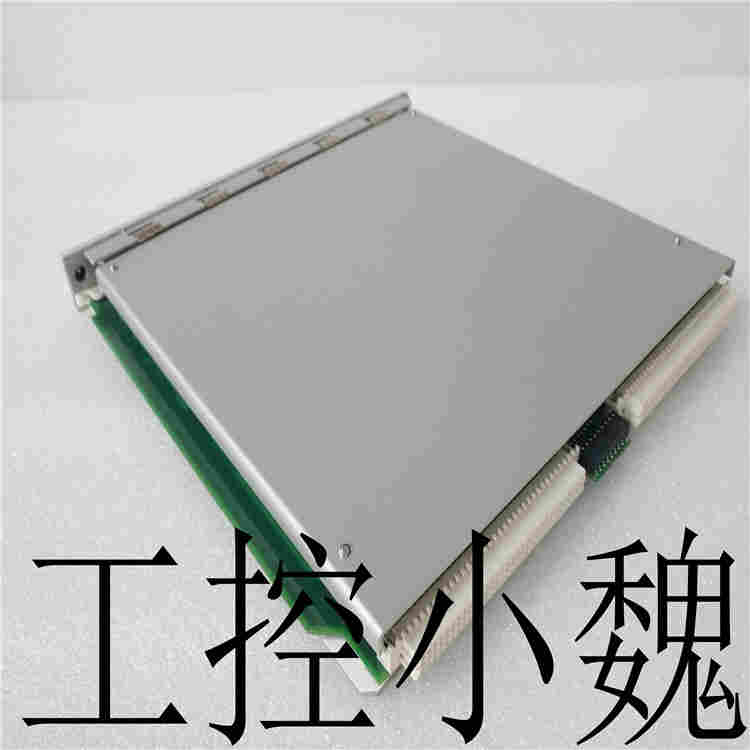
For gearbox housing vibration and motor pad vibration, corresponding 3500/42M monitor module shall be configured
Each monitoring channel is equipped with two relay output channels; 3500/32 (4-channel) or 3500/33 (16 channel) relay modules Bently use a 3500/92Modbus communication gateway. For units working in hazardous areas, 3500 monitor modules that access field signals must have built-in safety barriers; 3500/04 intrinsically safe grounding module shall be configured in the 3500 rack.
The product quality of Bently 3500 vibration protection instrument and condition monitoring system for rotating machinery strictly follows the American API670 standard.
Bentley vibration monitoring training course, the main content of this course: displacement sensor noise source
Noise is a signal you don't need, but in most cases, noise is unavoidable in the measurement process. Although the noise cannot be removed during the measurement, the noise can be reduced to a small degree of Z so that it does not affect your signal analysis. To achieve this, it is necessary to understand the source and characteristics of noise. Noise is an undesirable signal component, which can distort data and hinder your ability to extract machine state information from data. The information contained is independent of the machine state. Noise can be introduced from one part of the measurement system, but each part of the system has different sensitivity to noise. Bently displacement sensor includes Bently 3300 series eddy current sensor probe.
Noise source of displacement sensor
1. Installation: sensor bracket vibration 5. deviation – mechanical deviation
Noise source of displacement sensor
Runout – electric deviation alloy element non-uniform conductivity non-uniform magnetic conductivity non-uniform axis material local stress concentration There is a local magnetization area on the axis
Noise source of displacement sensor
Runout and running time – short mechanical and electrical deviations are stable
Noise source of displacement sensor
Runout and running time – medium time thermal and process parameters change Displacement sensor noise source
Deviation (runout) and running time – some noise sources (rust, corrosion, local magnetization area, etc.) change for a long time
Noise source of displacement sensor
Rotor bending: Why is the rotor bending often treated as deviation, and the rotating bending generates 1X signal? In mechanical fault diagnosis, 1X component of dynamic vibration signal is useful. When studying the synchronous response of machinery, the signal generated by bending shall be compensated,
Noise source of displacement sensor
Rotor bending – if the rotor bending is permanent, it can be treated as 1X noise source – some bending is unstable and will change with temperature and load. If such bending is repeatable, it can also be treated as noise. The bending caused by the shaft crack changes with the crack growth and has no repeatability. All three timers use an interrupt IRQ5. The timer interrupt status register is used to determine which timers started interrupts. The Interrupt Status Register is a general-purpose input register located outside of 82C54, offset 31h from the power management
I/O address. The interrupt status register address can be found for device ID 7113h and vendor ID 8086h by first determining the PCI configuration address. The power management I/O address can be found by reading an offset of 40h from this PCI configuration address. The timer interrupt status register bit is located at the I/O address at offset 31h of power management, bits 5, 6, and 7 (see Figure 4-2). The bytes of offset 31h read from the power management basic I/O address are used to obtain these bits. Bits 5, 6, and 7 correspond to timers 2, 1, and 0 respectively. In order to interrupt the status register of the timer, first write zero (0) to the general-purpose output register. The offset 37h input/output address bits 3, 4, and 6 (not bits 3, 4, and 5) on the power management . Then write 1 in the same bit of the re enable timer interrupt status register. Bits 3, 4, and 6 correspond to timers 2, 1, and 0 interrupt IRQ5 using PC/AT's standard program timer, respectively. See Appendix D for an example of using the 82C54 timer. VMIVME-7698 timers are mapped to the I/O address space starting at $500. Refer to Table 4-1 Timer, which consists of three 16 bit timers and a control word register (see Figure 4-4) and is read/written via the 8-bit data bus. Timer 0, 1 and 2 are functionally equivalent. Therefore, only
A single timer will be described
